
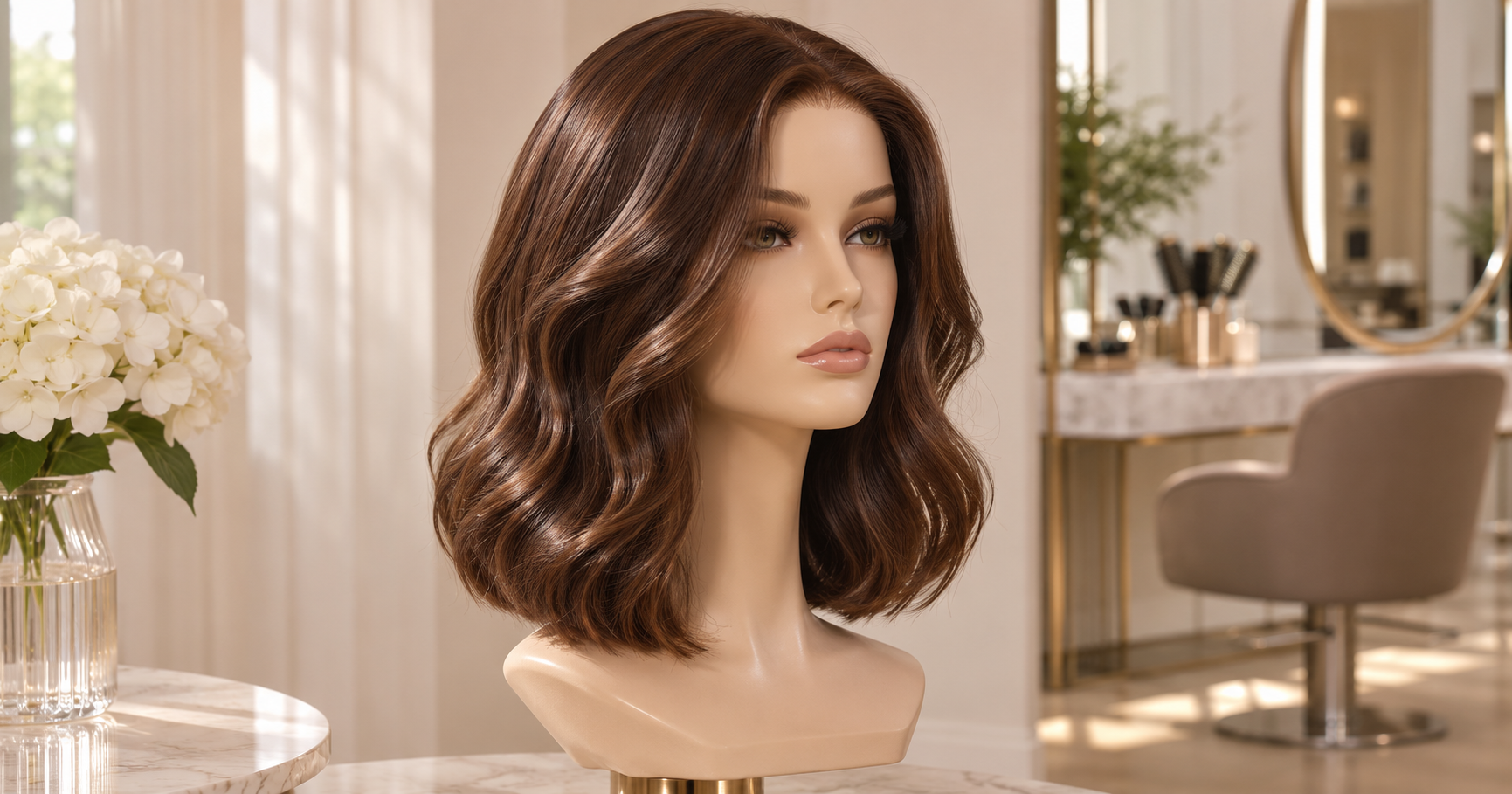
A great sheitel should be invisible. Nobody should notice it, only that you look like yourself on a very good hair day. Getting there takes more than picking a nice wig off a rack. It comes down to the hair, the cap, the color, the cut and the person who puts it all together.
Ilan Wain has designed custom wigs and styled hair for more than 30 years in Israel, London, New York and Los Angeles. From his salon on S Crescent Heights Blvd, he makes custom kosher wigs (sheitels) in natural human hair under the hashgacha of Rabbi Gross of Bnei Brak, and colors, cuts and styles every one himself. This guide collects what women most often ask him: what makes a wig kosher, which styles are trending in 2026, how to choose the right sheitel, how to make it last, and how to tell a well-made wig from one that looks like a wig.
The short version
- Kosher refers to where the hair comes from. A kosher sheitel is made from hair that a rabbinic supervisor (hashgacha) has confirmed does not come from a prohibited source.
- The 2026 look is polished and natural: glossy, healthy-looking hair, softer lived-in color with depth at the root, face-framing layers and lengths around the collarbone.
- Cap construction and fit matter as much as the hair. They decide how natural the part and hairline look and how comfortable the wig feels by the end of the day.
- The cut and color finish the wig. A custom sheitel colored and cut for your face will look more natural than an expensive wig worn straight out of the box.
- Good care roughly decides how long a sheitel lasts. Gentle washing, regular professional sets and limited heat keep it looking new.
What makes a wig kosher?
Many married Orthodox women cover their hair, and a sheitel (Yiddish for wig) is one of the most popular ways to do it. When people call a sheitel “kosher,” they are not talking about the style. They are talking about the source of the hair.
Much of the human hair sold worldwide for wigs comes from India, and some of it comes from temple tonsuring ceremonies. In 2004, leading rabbinic authorities in Israel ruled that wigs containing hair from these ceremonies may not be worn, because of the prohibition on benefiting from avodah zarah (idol worship). The ruling caused a worldwide stir, and many women stopped wearing their wigs until the source of the hair could be clarified.
Since then, wig makers have relied on rabbinic supervision to confirm that their hair comes from permitted sources. In practice, a hashgacha on a sheitel is a statement from a rabbi or supervising body that the supplier can be relied on regarding where the hair came from. Standards and opinions differ between communities, so if you have a halachic question about a specific wig or style, ask your own rav.
At Ilan Wain Salon, kosher wigs are made under the hashgacha of Rabbi Gross of Bnei Brak. If supervision matters to you, ask any wig maker who supervises the hair and what the supervision covers before you buy.
A short history of the sheitel
Covering the hair after marriage is a long-standing practice in Jewish law, discussed in the Talmud and later codes as part of tzniut (modesty). For most of history, married Jewish women covered their hair with scarves, caps and hats.
Wigs entered the picture in Europe a few centuries ago, and rabbis debated them from the start: some saw a wig as a fully valid covering, others objected that it looked too much like natural hair. Over time the sheitel became widely accepted, especially among Ashkenazi communities, and today it is one of the most common ways Orthodox women cover their hair, alongside tichels (headscarves), snoods, hats and falls. Customs still vary by community and family, which is why so many women ask their rav about the specifics.
Sheitel vocabulary, explained
Shopping for a sheitel comes with its own language. Here are the terms you will hear most:
| Term | What it means |
|---|---|
| Sheitel | A wig worn by a married Jewish woman to cover her hair. |
| Sheitel macher | The wig maker or stylist who makes, cuts, colors and maintains sheitels. |
| Kallah sheitel | A bride’s first sheitel, usually ordered well before the wedding. |
| Hashgacha | Rabbinic supervision, here confirming the hair comes from a permitted source. |
| Fall / band fall | A partial wig with no front hairline, worn under a headband, hat or scarf. Lighter and quicker to put on than a full sheitel. |
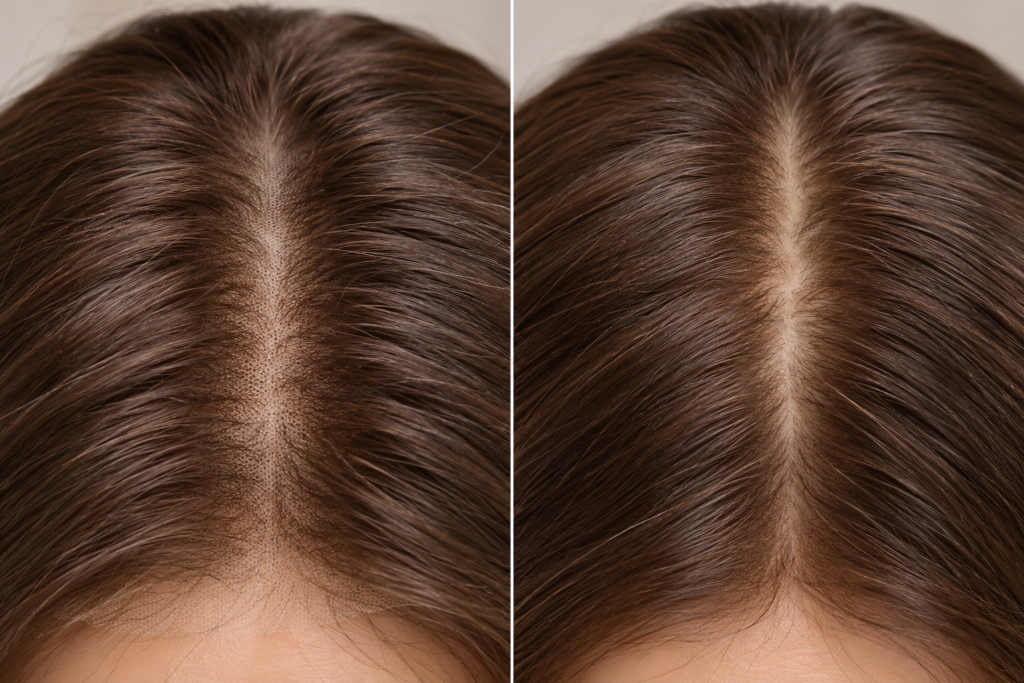
| Silk top | A cap with a fabric layer at the crown that imitates the look of a scalp at the part. Durable and very natural looking. |
| Lace top / lace front | Hair hand-tied into fine lace at the top or along the hairline, so the part and hairline look like they grow from the scalp. More delicate than a silk top. |
| Multidirectional | Hair attached so it can be parted and brushed in different directions instead of falling one fixed way. |
| Wefted vs. hand-tied | Wefts are rows of hair sewn onto the cap; hand-tied means individual strands knotted by hand. Many quality wigs combine both. |
| Density | How much hair is on the cap. Too much density is one of the most common reasons a wig looks like a wig. |
Sheitel trends for 2026
Sheitel styles follow mainstream hair fashion, filtered through modesty and everyday practicality. Mainstream hair in 2026 is moving away from the undone, beachy look of recent years toward hair that looks polished, glossy and healthy. Here is how that is showing up in sheitels:
1. The “expensive hair” finish
Smooth, shiny, healthy-looking hair with soft movement. On a sheitel, this starts with good-quality hair that has not been over-processed, and is finished with a smooth blowout instead of tight curls or heavy texturizing.
2. Soft, sculpted blowouts
Bouncy, rounded ends and gentle volume at the crown, a nod to 1990s glamour. It suits sheitels especially well, because a good blowout holds beautifully on human hair and can be refreshed with a professional set.
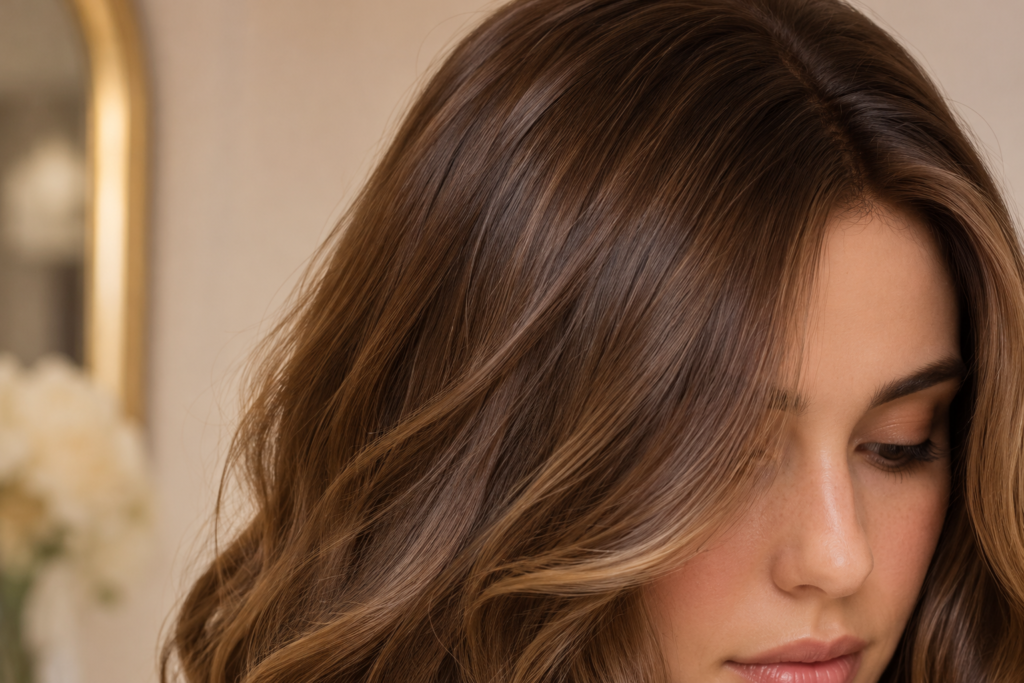
3. Lived-in color with depth at the root
Instead of solid, flat color, the trend is dimensional color: slightly deeper tones at the root, softer and lighter through the lengths, and subtle highlights around the face. Deeper roots also make a sheitel look more natural, because real hair is rarely one even shade. Rich brunettes are especially strong right now.
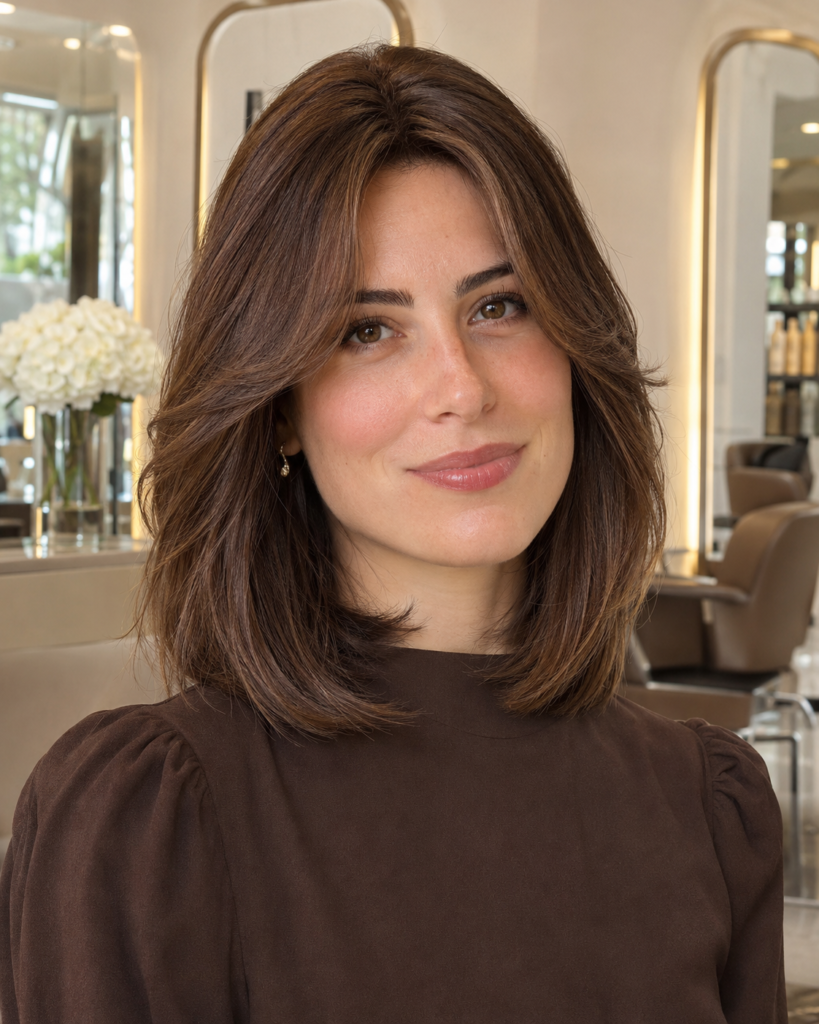
4. Collarbone lengths and the long bob
Very long, heavy sheitels are giving way to lengths between the chin and just past the shoulders. They are lighter to wear, cooler in a Los Angeles summer, quicker to style and easier to keep looking fresh.
5. Face-framing layers and curtain bangs
Soft layers that start around the cheekbones or jaw, and long, parted curtain bangs, flatter almost every face shape. They also soften the front of a wig and draw the eye away from the hairline.
6. More realistic tops and hairlines
Lace tops, lace fronts and refined silk tops are popular because they make the part and hairline look like natural growth. Some communities have specific guidance on very realistic styles, so check with your rav if you are unsure.
7. A wig wardrobe
More women own more than one piece: a polished sheitel for Shabbos and simchas, and a lighter fall or shorter everyday wig for work, errands and the gym. Spreading the wear also helps each piece last longer.
8. Custom over off-the-rack
Women increasingly want a wig made for their head, coloring and lifestyle, not a standard size in a standard shade. A custom sheitel costs more up front, but it fits better, looks more natural and often lasts longer, so many women find it better value over time.
9. Restyling instead of replacing
A sheitel that feels dated can often be given new life with a recut, a color refresh or a new shape. Ilan regularly recuts, recolors and restyles wigs, including ones bought elsewhere.
How to choose the right sheitel: a 7-step checklist
- Start with your life, not the photo. How many hours a day will you wear it? Do you work, commute, exercise or have small children pulling at it? Daily wear calls for a lighter cap, a manageable length and a style you can maintain yourself.
- Confirm the hair and the hashgacha. Ask what the wig is made of (human hair or synthetic) and, if kashrus matters to you, who supervises the hair source.
- Get the cap right. Fit is comfort. A cap that is too tight causes headaches; one that is too loose slips and shows. Ask how the cap is made and whether it is fitted to your head measurements.
- Choose color for your skin, not the trend. The most flattering color is usually close to your natural shade or a little softer, with dimension. Look at it in daylight as well as indoor light.
- Be realistic about length and weight. Long hair is beautiful but heavier and warmer. If you are unsure, start at collarbone length; you can always go longer with your next sheitel.
- Ask about density. Natural hair is fuller at the back and thinner at the hairline and part. A wig that is equally thick everywhere looks artificial.
- Know who will cut, color and maintain it. The cut and color turn a wig into your hair. Ideally the same expert who designs the wig also cuts it to your face and maintains it over time.
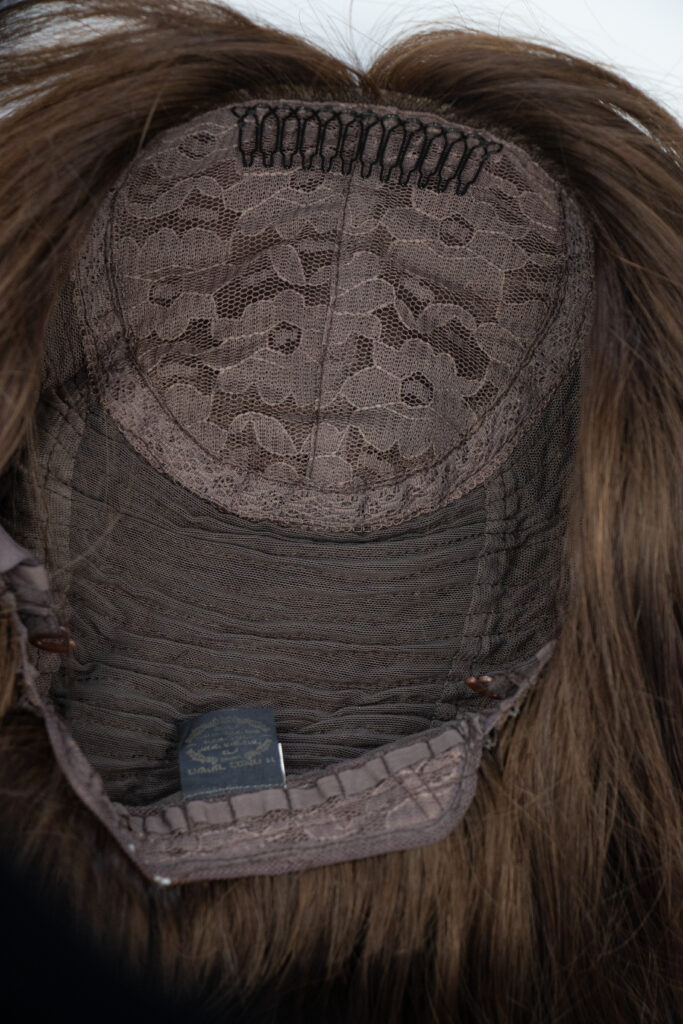
What separates a master-made sheitel from one that looks like a wig
Experienced wig makers check the same details every time. Look for these when you try a wig on:
- The part: it should look like scalp, not fabric or a visible grid of knots.
- The hairline: soft and slightly irregular, never a hard, straight edge.
- Movement: the hair should swing and fall naturally when you turn your head. A multidirectional weave lets it part and move freely.
- Density: lighter around the face and part, fuller at the back.
- Color: dimensional, with depth at the root and lighter pieces where the sun would naturally hit.
- Shine: healthy, not plastic-looking or overly glossy.
- The cut: shaped for your face, not the generic cut it arrived with.
Every Ilan Wain sheitel is made from natural human hair with a multidirectional weave on a hand-sewn cap, then colored, cut and styled by Ilan. If you like, he can also cut and color your own hair so it blends seamlessly with the wig.
Real-life situations: which sheitel fits?
These are common situations women describe when they first come in, and the direction that usually works best. Your consultation will be tailored to you.
The kallah ordering her first sheitel
She wants to look like herself on her wedding day and every day after. The usual advice: start early, choose a color close to her own, keep the length she already loves, and plan for a second, simpler sheitel or fall for everyday wear. If she likes, her own hair can be cut and colored to blend with the wig.
The busy professional who wears it ten hours a day
Comfort and low maintenance come first: a well-fitted, lighter cap, collarbone length, soft layers that fall into place with minimal styling, and a regular wash-and-set schedule so the sheitel always looks freshly done.
The woman whose current sheitel looks “wiggy”
She does not necessarily need a new wig. Often the fix is thinning out excess density, softening the hairline, adding face-framing layers and adjusting the color for more depth at the root. A professional restyle can make an existing sheitel look far more natural.
The woman experiencing hair loss
For clients with hair loss from medical treatment, alopecia or other conditions, comfort, a secure fit and complete discretion matter most. Ilan creates custom medical wigs, and documentation for cranial prosthesis insurance claims is available on request.
How to care for your sheitel
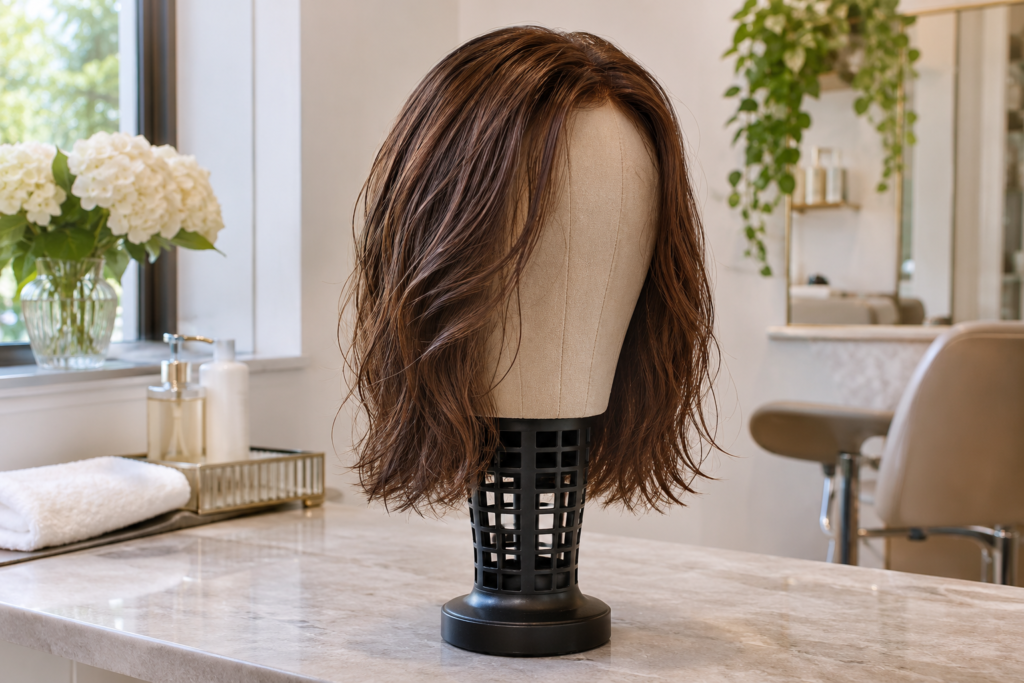
Human hair has no natural scalp oils to protect it once it is on a wig, so how you treat it decides how long it looks new. For more detail, see our guide to wig maintenance and whether to wash a new wig before wearing it.
- Wash gently and not too often. Use a wig-safe or sulfate-free shampoo and conditioner, cool to lukewarm water, and never rub or twist the hair.
- Let it dry on a wig block. Pat with a towel and let it air-dry on a form so the cap keeps its shape.
- Detangle from the ends up with a wide-tooth comb or wig brush, holding the hair above where you are brushing.
- Limit heat. Use low to medium settings and a heat protectant. Repeated high heat dries out hair that cannot repair itself.
- Protect it from the sun. Strong Southern California sun can fade and dry out a sheitel over time. A hat on long days outside helps.
- Do not sleep or shower in it, and avoid swimming in it. Chlorine and salt water are hard on human hair.
- Store it on a wig head or in its box, away from heat and direct sunlight.
- Book regular professional sets. A professional wash and set restores the shape and shine you cannot quite achieve at home. Ilan’s salon offers wig wash, set and maintenance.
Need products? The salon store carries wig care shampoo, conditioners and detangling brushes.
Why work with a master wig maker
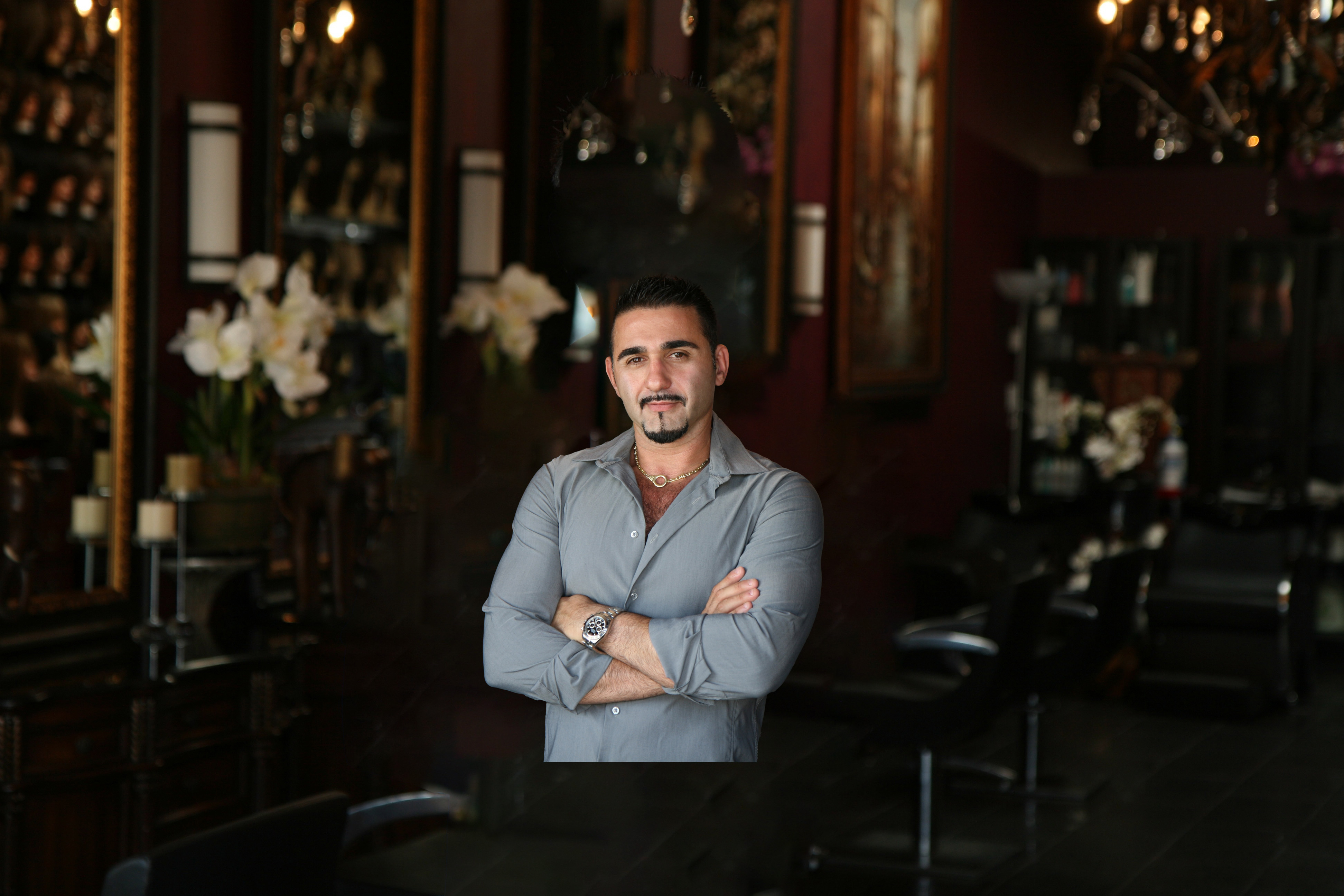
A sheitel is something you wear almost every day for years, so the person who makes it matters. Ilan Wain has designed custom wigs and styled hair for more than 30 years in Israel, London, New York and Los Angeles. Every wig starts with a one-on-one consultation at his Los Angeles salon, where he looks at your face, your coloring and how you live. He then designs the wig from natural human hair, colors it, cuts it and styles it himself.
That continuity is what most women value: the same expert who designs your sheitel also cuts it to your face, adjusts it over time and, if you want, takes care of your own hair so everything blends. You can see the craft for yourself in the video below.
See more of Ilan’s work in the portfolio, or read what clients say on the reviews page.
Frequently asked questions about kosher wigs
What makes a wig kosher?
A kosher wig (sheitel) is made from hair that a rabbinic supervisor has confirmed does not come from a prohibited source, such as hair offered in Hindu temple ceremonies. The term refers to the hair source, not the style. For halachic questions about a specific wig, ask your rav.
Who supervises Ilan Wain kosher wigs?
Ilan Wain makes kosher wigs under the hashgacha of Rabbi Gross of Bnei Brak.
Are Ilan Wain wigs made from human hair?
Yes. Ilan uses natural human hair only, with a multidirectional weave on a hand-sewn cap.
How long does a human hair sheitel last?
It depends on how often it is worn and how it is cared for. With gentle washing, regular professional sets and limited heat, a quality human hair sheitel can look good for several years. Having more than one piece and rotating them extends the life of each.
How often should a sheitel be professionally washed and set?
Most women who wear a sheitel daily have it professionally washed and set every few weeks. Wear it more often, in heat or with heavy product, and it will need it sooner.
What is the difference between a lace top and a silk top sheitel?
A silk top has a fabric layer at the crown that imitates scalp and is very durable. A lace top has hair hand-tied into fine lace, which gives a very realistic part and hairline but is more delicate.
What sheitel styles are trending in 2026?
Polished, glossy finishes, soft sculpted blowouts, dimensional color with deeper roots, collarbone-length cuts and long bobs, face-framing layers and curtain bangs, and more realistic tops and hairlines.
Can you restyle a sheitel I bought somewhere else?
Yes. Ilan recuts, recolors and restyles wigs, including sheitels bought from other wig makers.
Can my own hair be cut and colored to match my sheitel?
Yes. Ilan can cut and color your natural hair so it blends with your wig.
How much does a custom kosher wig cost?
Price depends on the hair, length, cap construction and color work. Ilan gives each client a quote at the consultation.
When should a kallah order her sheitel?
Start early. A custom sheitel needs time for the consultation, construction, coloring, cutting and any adjustments, so brides should book a consultation months, not weeks, before the wedding.
Where is Ilan Wain Salon?
1248 S Crescent Heights Blvd, Los Angeles, CA 90035, between Olympic and Pico, near Pico-Robertson and Beverly Hills. Open Monday to Friday, 10am to 6pm. Call (323) 935-1399 to book.
Ready for a sheitel that looks like your own hair?
Book a private consultation with Ilan Wain at 1248 S Crescent Heights Blvd, Los Angeles. Call (323) 935-1399 or book online. Open Monday–Friday, 10am–6pm.